Temperature control gets all the attention in produce logistics, but it’s rarely the reason a load shows up with soft tomatoes or wilted greens. Most spoilage happens in the gaps between well-managed temperature zones – the loading dock, the trailer’s dead air pockets, the fourth stop on a delivery route where the door’s been open for six minutes too long. Fixing the thermostat setting doesn’t fix any of that.
The Setpoint Is A Lie
A reefer trailer set to 34 degrees doesn’t hold 34 degrees everywhere inside it. Airflow inside a trailer isn’t uniform, and pallets stacked without gaps block the circulation the unit depends on. Sensors placed near the doors, in the middle of the load, and toward the nose of the trailer can read several degrees apart on the same shipment, even though the display up front says everything’s fine.
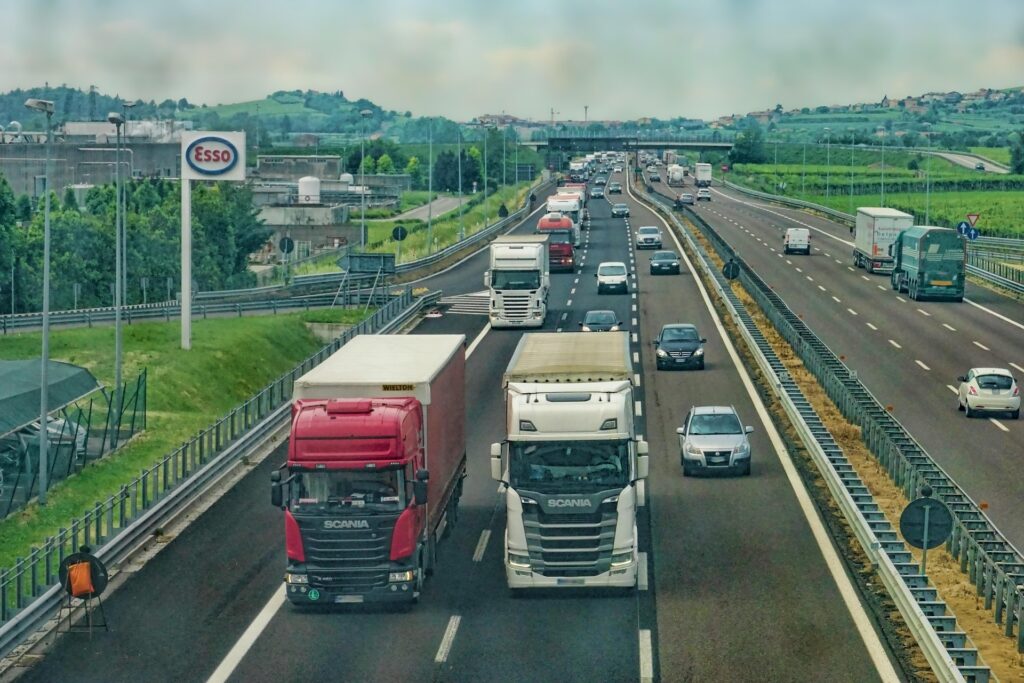
This is a pull-through refrigeration problem, not a thermostat problem. Air needs channels to move through the load, front to back, and pallets need to be arranged with that in mind rather than packed for maximum density. A trailer that looks efficiently loaded is often the one with the worst hot spots, because every gap the driver eliminated to fit more product was also a gap the cold air needed to move through. Operators chasing single-digit shrink rates spend more time on load configuration than on setpoint precision, because setpoint precision was never really the variable that mattered.
Dock Dwell Time Quietly Eats Shelf Life
Fruits and vegetables continue to age even while waiting for unloading. This means respiration, moisture loss, and senescence processes continue as long as the produce is not unloaded. Consequently, if a truck arrives at a warehouse and has to wait in a queue, this time spent waiting is subtracted from the product’s remaining shelf life. This occurs whether the truck refrigeration unit is still running or not.
Appointment scheduling and yard management play a big role in optimizing the time and lowering the impact of dwell time on dock doors. For example, a warehouse that assigns set arrival windows and manages trailer tracking in real-time can significantly reduce dwell times when compared to docks with no such systems in place. If a load arrives on schedule but has to wait 4 hours before it is unloaded, the lost shelf life is irreversible. The additional four hours spent at a dock can lead to unaccounted shrinkage in the future. Unfortunately, dock dwell time remains one of the most overlooked causes of product loss.
Ethylene Doesn’t Care About Your Thermostat
Did you know that bananas, apples, and tomatoes produce a gas called ethylene as they ripen? Unfortunately, this gas doesn’t stay contained within the ripening produce. If a truck or storage room is sealed tightly, the ethylene can’t escape and begins to accelerate the ripening process in all other nearby products, even those that are not related to the source of the gas. A shipment carrying ethylene-sensitive products alongside ethylene-producing fruit will likely arrive in uneven quality, even if the temperature has been properly maintained from pickup to delivery.
This factor requires you to think about compatibility groupings and ventilation, not just temperature control. Some of the best shippers tend to separate ethylene-sensitive products as a typical loading rule, just as they would separate hazardous materials by chemical class. It’s a cheap and easy solution if you’ve already worked it into your business as usual, but a common oversight since it isn’t a part of a tidy temperature-is-everything thought process. Ethylene management simply isn’t a problem that general freight has to deal with, and it’s arguably one of the best litmus tests for whether an operator gets produce or if they’re just tossing it in with everything else.
Compliance Turns Your Data Into Paperwork, Whether You’re Ready Or Not
Regulatory environments demand a documented chain of custody and temperature records that must be readily to hand, not laboriously reconstructed days or weeks later from scattered reefer unit printouts and drivers’ paper logs. If an auditor or customer requests proof that a load was never warmed above 35 °F and you respond with “we are pretty sure it was fine most of the way” you have failed the audit.
Paper logs and manual spot-checks fail this test regularly. They’re slow to produce, easy to accidentally exaggerate, and nearly impossible to cross-reference against carrier records when something goes wrong. Digital temperature records tied to a specific shipment ID solve the audit problem, but only if someone built the workflow to store and retrieve them on demand. Compliance isn’t really about collecting more data. It’s about being able to hand that data over in minutes instead of days, and most operations still can’t do that reliably.
Data Without Integration Is Just Noise
IoT sensors have made real-time temperature visibility cheap and common. Most shippers now get an alert the moment a reading drifts outside range. The problem is that an alert isn’t an action. A dashboard full of red flags tells you something went wrong; it doesn’t reroute the truck, notify the receiving warehouse, or escalate to the carrier automatically.
That gap is where a transportation management system earns its place. A TMS takes the raw sensor feed and turns it into routing decisions, carrier accountability, and dispatch instructions that actually change what happens next. Real-time visibility platforms now combine temperature monitoring, TMS routing, and automated alerts into a single operational layer, which is a meaningful shift from the old model of separate systems that didn’t talk to each other. Modern food logistics is less about tracking a cold chain and more about connecting the operational data that used to live in silos. Blockchain-based traceability is starting to layer on top of this for immutable record-keeping, but the core win is still workflow integration: sensor data has to trigger a decision, or it’s just a number nobody acts on until it’s too late.
The Human Factor Nobody Puts On A Dashboard
Technology can flag a problem. It can’t load a pallet correctly, and it can’t make a tired driver check a seal before pulling out of a dock. Driver turnover in refrigerated freight is high, and a driver who’s new to a route or unfamiliar with produce-specific handling can undo weeks of careful planning in one bad decision – leaving a door open too long, running the reefer on the wrong mode, or stacking cartons in a way that blocks airflow.
Dock workers matter just as much. Untrained staff moving pallets quickly to hit a turnaround target often sacrifice the careful handling perishables need, bruising product or breaking the airflow channels a load was built with. Standard operating procedures and recurring training close this gap, but they only work if they’re actually enforced at the dock level, not just written into a manual somewhere. The best cold chain infrastructure in the world doesn’t protect a load from careless handling.
The Last Mile Is Where It All Falls Apart
The usual path from the distribution center to the retail door is the shortest part of the whole trip, and yet it’s the part that’s the most fraught with peril for the cold chain. The obvious reason is multi-stop delivery routes. Every time the door opens at a stop, the entire space that the cargo is in gets exchanged with ambient air. If a truck is only a quarter or half or three-quarters full of pallets bound for this particular stop, the rest of the cargo is still exposed to that air exchange. If trailers are not pre-cooled, pallets in the front of the trailer suffer from the accumulated temperature abuse of all the previous cycling.
If the driver has twelve other stops to make that afternoon, with that same process getting repeated again and again, for all intents and purposes, it doesn’t matter that you had a refrigerated truck. The cargo space has just been cycled twelve times. Given that a lot of these marginal costs come not from slips but from complaints leading to credits and lost sales, density optimization doesn’t completely fix the shrink, but it is your first line of defense.
Manufacturing and Logistics Have To Plan Together
All of this falls apart if food manufacturing and logistics are working in silos. Production schedules that fail to consider carrier capacity lead to one of two scenarios: a fresh product completes processing and waits for a truck, or a truck arrives too early and either idles or departs empty. In either case, you lose shelf life and hemorrhage cash.
Better synchronization of production forecasting and freight planning means product can leave the plant at precisely the time the receiving warehouse is prepared to receive it – the essence of cross-docking. Cross-docking essentially involves bypassing a storage step by transferring perishables directly from receiving to shipping, but that’s only possible if suppliers and carriers have planned close enough that “directly” doesn’t deteriorate into “sitting on a dock waiting for the next truck”. That’s not a function found in any software program – it’s a planning mentality that software can help to enable, but not create out of thin air.
Where The Real Losses Hide
Approximately a third of all food produced in the world is lost or wasted every year – about 1.3 billion tons – and much of that occurs in the process of logistics and distribution as opposed to on the farm or at the retail shelf (FAO). That’s not a temperature problem by itself. It’s dock delays, poor load-building, ethylene, human error, last-mile exposure all those other things piling up on top of each other until they collectively outweigh the reefer unit doing whatever right.
Similarly, shippers who’ve seen shrinkage to single digits didn’t get there by purchasing a fancier thermostat. They got there by treating the cold chain as one part of a much bigger operational puzzle, and then putting into place the coordination, training, and data flows that can catch the problems temperature control was never meant to solve.