Picture a large building with a door that still opens for someone who left the company two years ago. No one decided to keep that access alive. It could survive because the access control database, the HR records and the camera system all keep their own version of the truth. The signs that an electronic security estate needs a coordinated upgrade often arrive as small frictions that build into real exposure over time.
Access control, cameras and HR run on separate lists
An organization can easily end up running three lists of the same people. HR has its records, the access control system has its cardholders, and the video platform has its own user accounts. When those lists are maintained by hand, they slowly drift apart. A departing employee is removed from payroll on Friday, yet their card keeps working because no one opened a second console to check. A contractor’s pass expires in one system and stays live in another. Temporary and contractor badges are often the hardest to track, issued quickly and rarely chased down. Security teams call this identity drift, and physical security audits look for it.
The risk concentrates at offboarding. Revoking access depends on someone remembering every system that person ever touched, and relying on memory alone is a weak control. Former staff sometimes retain viewing rights on camera systems long after their network login is gone, because the video platform was never part of the departure checklist. Modern platforms handle this through role-based access control tied to the corporate directory, such as Active Directory. Disable the account or change the role, and door rights follow. Organizations with high turnover or heavy contractor use notice the weakness first, and they have the most to gain from closing it.
The card at the door is easier to copy than it looks
Many access systems still depend on 125 kHz proximity cards, the standard Prox format that has been around for decades. These cards present their credential without encryption, and cheap handheld RFID duplicators can copy them. The wiring behind the reader often makes the problem worse. The legacy Wiegand protocol sends data between reader and controller in plain form, which leaves it open to packet sniffing and credential skimming wherever someone can reach the cable run.
Afterward, everything looks completely normal. A cloned card produces a valid door event, the log shows a known credential, and nothing alerts. Estates built on this hardware routinely fail modern penetration audits because testers walk in with a copied card, not because they break anything. The modern replacement is the Open Supervised Device Protocol, or OSDP, which gives bidirectional, supervised communication between reader and controller and reports tampering. Encryption is available through its Secure Channel feature, but it has to be enabled, so an installation only gains that protection when the feature is switched on and configured. Ordering new cards alone may not fix the problem. Have the audit establish which readers, controllers and cable runs actually need replacing alongside the credentials, which is why this belongs in a coordinated plan. Any estate still issuing 125 kHz cards over Wiegand wiring carries a known weakness that an upgrade should retire first.
Aging cameras sit on the network as unpatched endpoints
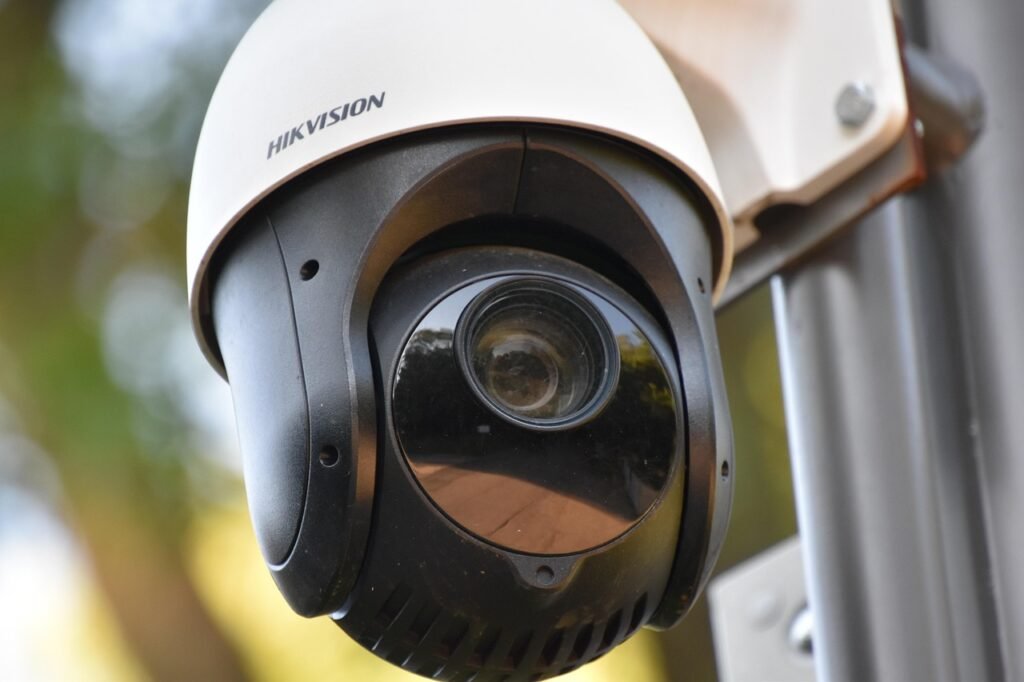
Cameras and recorders used to be closed circuits. Now they are network devices, and many of those devices are old. When a manufacturer marks a camera or NVR as end of life or end of support, firmware patches stop. The device keeps working, so it stays on the wall, but every known vulnerability in it stays open for good. In many estates there is no complete inventory of which camera models sit where, so end-of-support notices never reach anyone who could act on them. Discontinued NVRs are the worst case: they hold the footage, and they can’t be patched.
An unpatched camera may still record, but it can also become an entry point. Compromised cameras get absorbed into botnets, and a foothold on one device can give an attacker a path for lateral movement into the wider corporate network. Network segmentation is the standard IT response: physical security devices sit on their own VLANs, isolated from business systems, so a compromised camera does not become a bridge. Older estates grew before this was routine, and their cameras often share flat networks with file servers and workstations. Treating cameras as governed IT assets, with patch cycles and isolation, is now baseline practice. An estate that cannot say which of its cameras still receive firmware updates has already identified one warning sign.
False alarms are training people to look away
Perimeter sensors degrade slowly. A fence-line detector starts tripping in high wind, a door contact fires when the frame flexes, and the false alarm rate creeps upward. Each nuisance trip costs a small amount of attention, and monitoring teams adapt by assuming alarms are noise. The wasted response runs add up on the invoice as well, whether the site pays for guard call-outs or burns its own team’s hours.
After the hundredth false trip, few alerts get a genuine second look. That is alarm fatigue, and it is a system problem as well as a people problem.
A rising false alarm rate is a health metric. It tells you sensors are degrading or the system can no longer correlate events well enough to filter noise. Wasted call-outs cost money, but the greater danger is the one genuine breach that looks exactly like the fifty false ones before it.
Quick fixes have built a fragile estate
Most legacy estates were never designed as a single, coherent whole. They accumulated. A camera failed and was swapped for whatever was in stock. A reader died and was replaced like for like. Each decision was reasonable at the time, and together they produce what engineers call a Frankenstein architecture: components from different eras and manufacturers that technically function but share nothing.
The cost often shows up during incidents. Because the systems do not share telemetry, there is no automated cross-system verification. An access denial can’t call up the matching video. An intrusion alarm can’t pull the nearest camera feed onto the operator’s screen. Every event has to be checked by hand, across consoles, after the fact, which is slow when it happens at all.
Piecemeal thinking also breaks the upgrades themselves. Swapping old cameras for modern high-resolution IP units without an infrastructure review regularly backfires. The new cameras need more bandwidth than the old network segments were built to carry. High-draw devices such as PTZ cameras and IR illuminators strain older switches, and smart readers add load of their own, so the Power over Ethernet budget gets exceeded. The result is dropped frames and intermittent outages, which get blamed on the new cameras even though the missing plan caused them.
A coordinated upgrade treats the estate as one system
A coordinated upgrade program begins with an audit. Someone maps every layer of the estate: access control, cameras, intrusion alarms and perimeter detection, plus the network and power infrastructure underneath. The audit identifies which devices are end of support, which credentials can be cloned, where the databases disagree, and which switches can’t power what the plan needs.
For estates that have grown piecemeal, an experienced provider, such as a security company adelaide organizations turn to for integrated systems, can run that audit across all the layers at once and design a unified, phased transition roadmap. Phasing keeps the work affordable. Open-architecture software lets an organization replace hardware in stages instead of paying for a full forklift replacement, and it lets the budget spread across financial years. The audit itself becomes a working document, a prioritized list of weaknesses mapped to phases that budget holders can approve. A modern video management system centralizes camera feeds, event correlation and digital forensics on one platform. A physical security information management layer goes further: it pulls access and alarm events into the same operational interface as the video. ONVIF compliance helps here, though it is no guarantee on its own, since cameras and recording platforms from different manufacturers only interoperate when they share compatible profiles and support the same features.
With that software foundation in place, the hardware phases become a matter of sequencing. Readers migrate to OSDP, cards move off 125 kHz formats, cameras shift onto segmented VLANs, and access privileges sync to the corporate directory through role-based control. Each phase removes a known weakness and leaves the estate more coherent than it was. Whether the work sits with an in-house team or a security company, the order stays the same. Otherwise the work waits for a forcing event and gets done later under incident pressure.
What changes once the systems work as one
The first change is evidential. When access control, cameras and alarms feed into shared event records, an incident can be reviewed in one place instead of being pieced together across separate consoles. That only holds when logging and retention are configured appropriately, with consistent timestamps and records kept long enough to be useful. Disjointed legacy systems rarely offer that without manual reconstruction, and anyone reviewing an incident after the fact can tell.
The second change is operational cost. Multi-site organizations running legacy kit can’t monitor or patch their installations remotely, so every firmware update and every fault becomes a site visit. Modern platforms flip that. Central teams patch devices and check system health across every site from one console, configuration changes no longer mean a call-out, and the maintenance budget is no longer consumed by travel time.
The third change is detection quality. Edge AI and computer vision analytics now run on the camera itself. They flag perimeter breaches, loitering and other unusual activity on the spot, and the network stays clear of constant streams. With cross-system correlation, an alarm arrives with its video already attached. Offboarding becomes a single directory action instead of a tour of consoles, and verification stops being a trawl through footage after the fact.
None of these signs need a breach before they deserve attention. Separate databases, cloneable cards, unpatched cameras, rising false alarms and a patchwork estate are visible long before anything goes wrong. The practical next step is the audit: a full inventory of what the estate runs, what it can’t do, and what a phased path out looks like in practice.